A Beginner’s Guide to Aperture and Depth of Field
Understanding aperture and depth of field is a fundamental step in learning photography. These concepts influence how an image looks, from the amount of light entering the camera to the sharpness of different areas in the frame. For anyone starting out, grasping the relationship between the aperture setting and the resulting depth of field can open up new possibilities for visual storytelling. This article explores the mechanics behind aperture and depth of field, and describes how these elements can be approached with intention during the shooting process.
Aperture refers to the opening within a lens through which light passes. It is measured in f-stops, such as f/2.8 or f/16. A lower f-number indicates a wider opening, while a higher f-number corresponds to a narrower opening. Depth of field, on the other hand, describes the zone of acceptable sharpness in front of and behind the subject. When the aperture is wide, the depth of field tends to be shallow, isolating the subject from the background. When the aperture is narrow, the depth of field becomes deeper, keeping more of the scene in focus.
Rather than being a rule to follow rigidly, aperture and depth of field offer a range of choices that depend on the photographer’s intent. Different situations call for different approaches, and understanding the underlying mechanics helps in making informed decisions. The following sections break down these concepts into practical, process-oriented explanations.
Understanding Aperture and F-Stops
Aperture is expressed through a series of standard f-stop numbers, such as f/1.4, f/2, f/2.8, f/4, f/5.6, f/8, f/11, f/16, and f/22. Each step up or down represents a halving or doubling of the amount of light reaching the sensor. A lens set to f/2.8, for instance, allows twice as much light as f/4. The scale is logarithmic, meaning the numbers themselves do not double, but the light transmission does. This systematic progression helps photographers predict and control exposure.
The maximum aperture of a lens is often referred to as its “speed.” Lenses with a wide maximum aperture, such as f/1.4 or f/2.8, are considered fast because they let in more light, enabling faster shutter speeds in low-light conditions. The minimum aperture is typically around f/16 or f/22, which reduces light significantly but increases depth of field. It is worth noting that the optical quality of a lens can vary across the aperture range, and some apertures may produce sharper images than others depending on the lens design.
When adjusting aperture, the camera’s exposure metering system compensates by changing shutter speed or ISO if the camera is in an automatic or semi-automatic mode. In manual mode, the photographer balances all three variables. Understanding f-stops as a scale rather than isolated values helps in developing a smoother workflow when composing images.
How Aperture Affects Depth of Field
Depth of field is directly influenced by three factors: aperture, distance to the subject, and focal length. Among these, aperture is often the most accessible to adjust during a shoot. As the aperture widens (smaller f-number), the depth of field becomes shallower. For example, at f/2.8, the area in focus might be limited to a few inches, whereas at f/11, a much larger portion of the scene can remain sharp.
The relationship between aperture and depth of field can be visualized using the concept of the circle of confusion. Light rays from a point in the scene pass through the lens and converge on the sensor. When the point is at the exact focus distance, it forms a sharp point. As the point moves away from the focus plane, the light rays form a blur circle. The aperture size determines how quickly this circle grows—a larger aperture produces a faster increase in blur, resulting in a more pronounced out-of-focus effect.
For landscape photography, a deeper depth of field is often desired to keep both the foreground and background sharp. This is typically achieved by using a narrow aperture like f/11 or f/16. In portrait photography, a wider aperture such as f/2.8 or f/1.8 can help separate the subject from the background, creating a smooth bokeh effect. The selective focus draws attention to the subject and reduces distractions.
Distance also plays a role. Even at a wide aperture, if the subject is far away, the depth of field can increase. Conversely, a close-up shot at a narrow aperture can still produce a shallow depth of field because of the proximity. Photographers often use a combination of aperture and distance to fine-tune the desired effect.
Creative Applications of Shallow Depth of Field
Shallow depth of field is a widely used technique for directing the viewer’s eye. By making the background or foreground softly blurred, the main subject becomes the clear focal point. This approach is effective in portraits, macro photography, and in situations where the background might be cluttered or less important. The quality of the blur, often referred to as bokeh, depends on the lens construction, the aperture shape, and the distance between the subject and the background.
Another creative use is to suggest motion or depth. For example, in a street scene, focusing on a single person with a blurry background can create a sense of isolation or storytelling. In nature photography, a shallow depth of field can highlight a flower while softening the leaves behind it. The effect can also be used to create a layered look, where different planes of the image have varying levels of sharpness.
It is important to consider that a very shallow depth of field can also lead to critical focus issues. When the area of sharpness is extremely thin, even slight movement by the subject or the photographer can cause the intended focal point to fall outside the in-focus zone. Techniques like using a tripod, employing continuous autofocus, or selecting a slightly smaller aperture might help in maintaining consistent results. The choice of aperture for creative effect often involves a trade-off between the desired aesthetic and the practical need for a workable depth of field.
Achieving Deep Depth of Field
Deep depth of field is commonly sought in architectural, landscape, and group photography, where sharpness from the nearest element to the farthest is important. Using a narrow aperture, such as f/11 or f/16, extends the in-focus region. However, there is a phenomenon called diffraction that can reduce overall sharpness at very small apertures like f/22. Diffraction occurs when light waves bend around the edges of the aperture blades, causing a slight softening of the image.
To achieve deep depth of field without compromising sharpness, many photographers choose an aperture that balances depth of field and optical performance. For many lenses, the sharpest aperture is typically around two to three stops down from the maximum, often around f/8 for a lens that opens to f/2.8. At f/8, the depth of field is already quite extensive for standard shooting distances, and diffraction is minimal. If even deeper depth of field is needed, focusing techniques such as hyperfocal distance can be used. The hyperfocal distance is the focus distance that maximizes depth of field from half that distance to infinity.
Using a smaller aperture also reduces the amount of light reaching the sensor, which may require longer shutter speeds or higher ISO settings. When shooting handheld, a narrow aperture might lead to camera shake if the shutter speed drops too low. In such cases, a tripod or other stabilization method can be used to maintain image sharpness. The process of selecting an aperture for deep depth of field therefore involves considering the lighting conditions, the stability of the camera, and the desired overall sharpness.
Balancing Aperture with Other Exposure Settings
Aperture is only one part of the exposure triangle, which also includes shutter speed and ISO. Changing the aperture affects the amount of light that reaches the sensor, so the other two settings must be adjusted in response to maintain a correct exposure. For instance, if the aperture is narrowed from f/4 to f/8 (two stops less light), the shutter speed might need to be lengthened or the ISO increased by a corresponding amount.
In bright outdoor conditions, a narrow aperture can be useful even when deep depth of field is not needed, simply to avoid overexposure when using a fast shutter speed. Conversely, in low light, a wide aperture helps gather more light, enabling faster shutter speeds and lower ISO to reduce noise. The decision about which aperture to use often starts with the creative goal for depth of field, and then the other settings are adjusted accordingly.
Many cameras offer aperture priority mode (A or Av), where the photographer selects the aperture and the camera automatically chooses the shutter speed. This can be a practical way to explore depth of field without needing to manually adjust exposure each time. In this mode, it is still important to monitor the shutter speed to ensure it is fast enough to avoid blur from camera movement or subject motion. If the selected aperture leads to a shutter speed that is too slow, the photographer can raise the ISO or use a wider aperture.
Practical Considerations and Lens Limitations
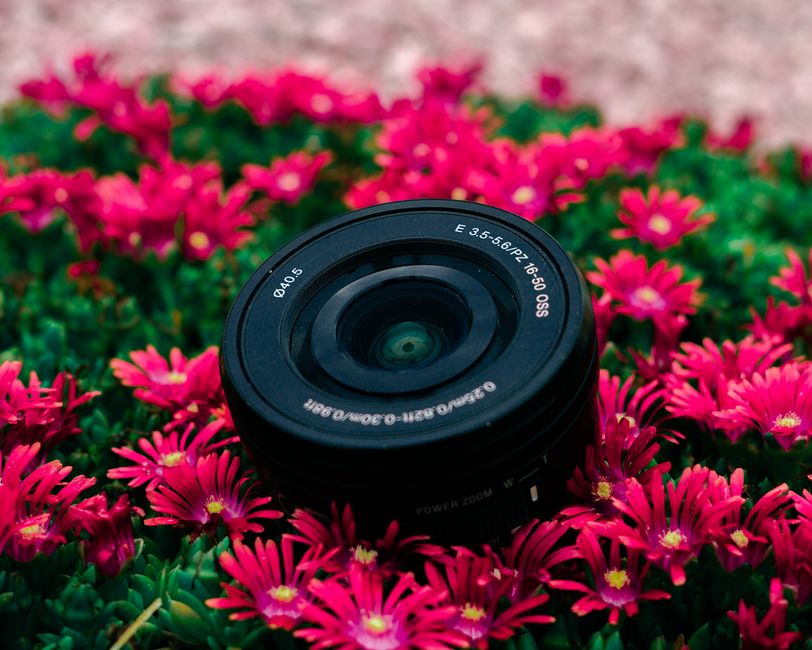
Every lens has its own characteristics regarding aperture range and optical performance. Kit lenses often have a variable maximum aperture that changes with zoom, such as f/3.5-5.6. This means the maximum aperture becomes narrower as the focal length increases. Prime lenses, with a fixed focal length, typically offer a wider maximum aperture and better control over depth of field. Understanding the specific lens being used helps in predicting how aperture adjustments will affect the image.
Another factor is the lens’s minimum focusing distance. When working with shallow depth of field, being closer to the subject reduces the depth of field further. Macro photographers often use very small apertures like f/16 or f/22 to increase depth of field in close-up work, but diffraction becomes more pronounced at those apertures. Some lenses are designed to handle diffraction better than others, so testing a lens at different apertures can reveal its optimal range.
Depth of field is not just a technical setting; it is a creative choice that shapes how a scene is perceived. By experimenting with different apertures and observing the changes in focus, photographers can develop an intuitive sense of how to control the visual narrative.
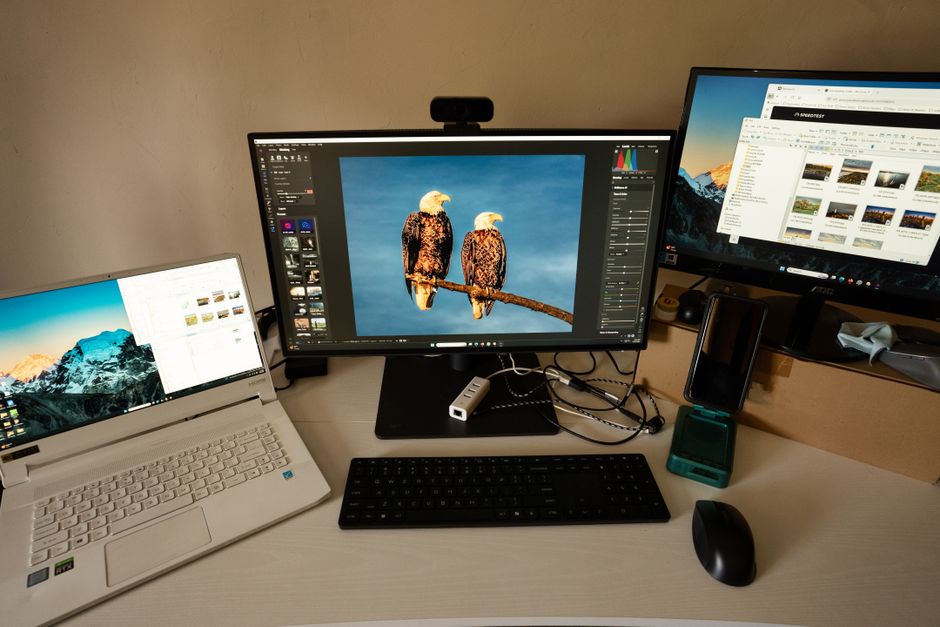
Ultimately, the best approach is to practice with the equipment available. Making small adjustments to the aperture and reviewing the results on a larger screen can provide immediate feedback. Over time, the relationship between aperture numbers and depth of field becomes second nature, allowing the photographer to focus more on composition and less on calculations. Whether aiming for a softly blurred background or a tack-sharp landscape, the aperture remains a versatile and accessible tool.